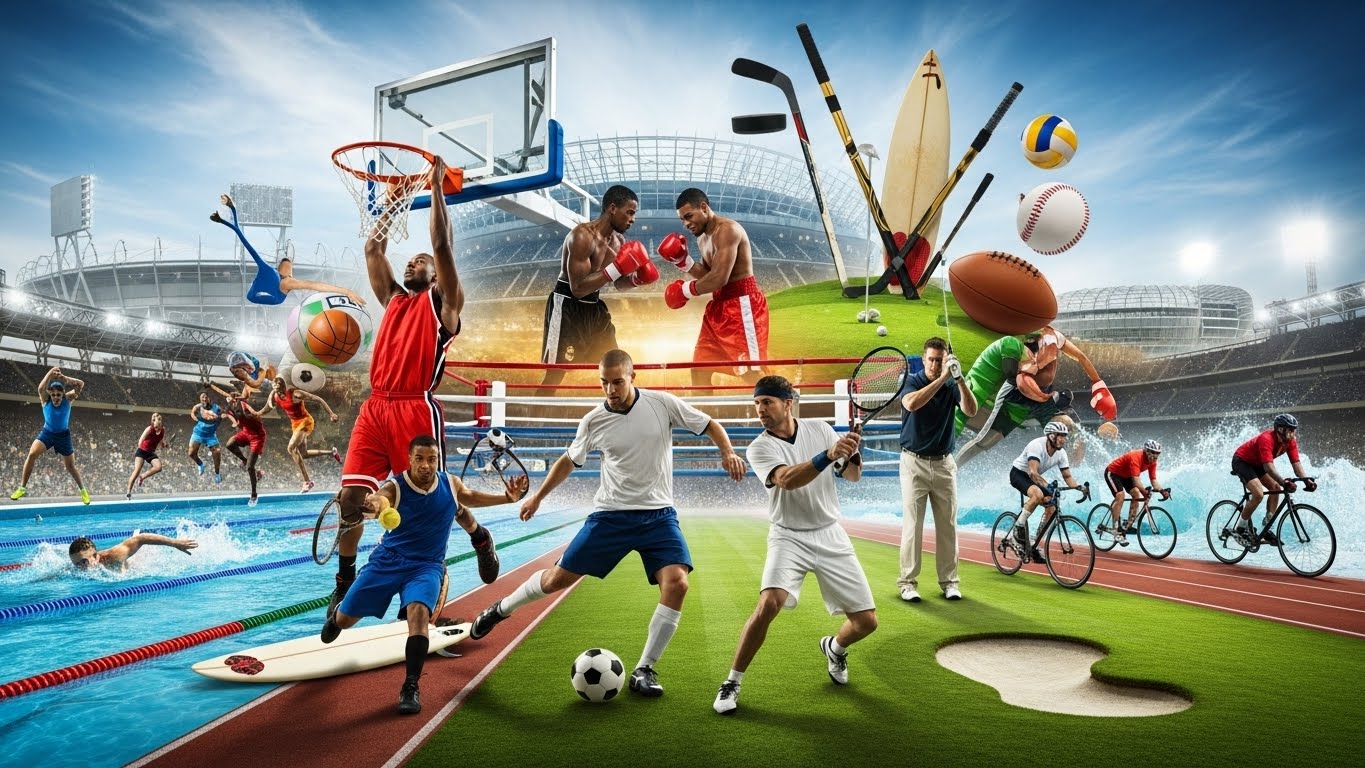

The Role of Sports in Modern Society: Impact, Evolution, and Significance
Sports have been an integral part of human civilization for centuries, influencing not only individual lives but entire societies and cultures. From ancient civilizations to modern-day professional leagues, the evolution of sports has mirrored the progress of humanity, with sports becoming more than just a form of physical activity. Today, sports are a global enterprise, a source of entertainment, a platform for social change, and a multi-billion-dollar industry that transcends borders and cultures. This blog post delves into the history, societal impact, and future of sports, exploring how they shape our lives on multiple levels and continue to evolve in ways that reflect broader societal changes.
The Origins of Sports: From Ancient Civilizations to the Classical Era
The origins of sports can be traced back to the earliest human civilizations, where physical activities were not only a means of survival but also a form of entertainment and ritual. The first organized athletic competitions were held in ancient Egypt, Greece, and China, where physical prowess was seen as both an individual achievement and a community celebration. Early sports in these cultures were often tied to religious ceremonies or royal displays, with events held to honor gods or kings.
The ancient Greeks are perhaps the most famous for their contributions to the development of organized sports. The Olympic Games, which began in 776 BCE in Olympia, Greece, were more than just athletic competitions—they were a celebration of Greek culture and a demonstration of individual skill and endurance. Athletes competed in events such as running, wrestling, and the pentathlon, which consisted of running, jumping, discus, javelin, and wrestling. These games became a major part of Greek life and culture, serving both as a form of entertainment and a means of fostering unity between the various Greek city-states.
Beyond the Greek world, other ancient civilizations also had their own forms of physical contests. In ancient Rome, gladiatorial combat was one of the most popular spectacles, where trained fighters, often slaves or prisoners of war, would engage in life-or-death battles for the amusement of the Roman public. Similarly, the ancient Chinese practiced martial arts, which were both combat training and forms of self-discipline, while the Egyptians enjoyed a variety of games that involved skill, strength, and strategy.
The Development of Organized Sports in the Modern Era
While the roots of sports can be traced back to ancient times, it was during the Industrial Revolution in the 19th century that modern sports as we know them today began to take shape. The rise of industrialization, urbanization, and the growth of the middle class in Europe and North America created the conditions necessary for the formalization of sporting competitions. With the advent of public schools and universities, new rules and organized competitions emerged, transforming informal pastimes into structured and professionalized sports.
In Britain, this period marked the birth of many modern sports. Football (soccer), rugby, cricket, and tennis were all codified in the 19th century, with official rules established for each sport. The founding of the Football Association in 1863 standardized the rules of soccer, setting the stage for the rapid growth of the sport. Similarly, rugby and cricket evolved during this time, with organized clubs and competitions emerging. The sport of tennis also gained popularity in the 19th century, with the first Wimbledon Championships being held in 1877.
Meanwhile, in the United States, new sports were emerging as well. Baseball, which had its roots in various bat-and-ball games played in colonial America, became the dominant sport in the country, with the formation of professional leagues in the late 19th century. American football also developed during this period, evolving from rugby and soccer into a uniquely American sport that would go on to become one of the most popular and commercially successful sports in the world.
As the 20th century progressed, the development of mass media—particularly radio, television, and, later, the internet—helped sports reach a wider audience. Broadcasts of major events like the World Series in baseball, the Super Bowl in American football, and the World Cup in soccer brought sports into the homes of millions of people around the world, transforming them into global spectacles.
The Globalization of Sports: A Universal Language
One of the most significant developments in the history of sports has been their globalization. Today, sports transcend national borders, uniting people from different cultures and backgrounds. The rise of mass media, coupled with the expansion of international competitions, has transformed sports into a global industry that attracts billions of viewers and participants each year. Whether it’s the FIFA World Cup, the Olympics, or the NBA, major sports events are followed by fans from every corner of the globe.
The growth of international competitions has been a major factor in the globalization of sports. The Olympics, for instance, have evolved from a small event in ancient Greece to a global celebration of athletic achievement. The Summer and Winter Olympic Games, held every four years, bring together athletes from over 200 nations, showcasing a diverse range of sports and cultures. Similarly, the FIFA World Cup, which is held every four years, has become the most-watched sporting event in the world, with an estimated 3.5 billion people tuning in to watch the 2018 tournament.
Professional leagues like the English Premier League (EPL), the National Basketball Association (NBA), and Major League Baseball (MLB) have also contributed to the global appeal of sports. Players from around the world compete in these leagues, making them truly international in scope. The EPL, for example, features players from every continent, while the NBA has become a global powerhouse, with players from countries like China, Greece, and Serbia joining American athletes in the pursuit of championship glory.
Sports and Society: More Than Just Entertainment
While sports are primarily a form of entertainment, their impact on society extends far beyond the playing field. Sports have the power to bring people together, promote social change, and influence cultural and political movements. From fostering national pride to challenging social norms, sports have been at the forefront of numerous important societal shifts.
One of the most significant ways sports have influenced society is through the promotion of national pride and unity. International sporting events, such as the Olympics and the World Cup, often serve as a platform for nations to showcase their strength and unity. When a country’s athletes perform well on the world stage, it fosters a sense of collective pride and achievement among its citizens. National teams become symbols of the country’s identity, and the success of these teams is often seen as a reflection of the nation’s values and aspirations.
Sports also play a critical role in social change. Throughout history, athletes have used their platforms to speak out against injustice and advocate for equality. In the 1960s, for example, Olympic athletes Tommie Smith and John Carlos raised their fists in protest during the medal ceremony at the 1968 Summer Olympics to draw attention to racial inequality in the United States. Similarly, athletes like Muhammad Ali, Billie Jean King, and Jackie Robinson have used their visibility to challenge societal norms and fight for civil rights.
In more recent years, athletes have continued to use their influence to address issues such as gender equality, racial justice, and LGBTQ+ rights. The #MeToo movement, for example, has found support from female athletes like Serena Williams and Megan Rapinoe, who have used their platform to speak out against sexual harassment and inequality in sports and society at large. Similarly, Colin Kaepernick’s protest against racial injustice by kneeling during the national anthem sparked a national conversation about police brutality and racial inequality in the United States.
The Economic Power of Sports: A Multibillion-Dollar Industry
Sports are not only a source of entertainment and social change—they are also a massive economic driver. The sports industry is worth billions of dollars globally, with revenue generated from ticket sales, television rights, sponsorships, merchandise, and licensing deals. Major sporting events, such as the Super Bowl, the FIFA World Cup, and the Olympic Games, generate enormous amounts of revenue for the host cities and countries, with tourism, local businesses, and infrastructure benefiting from the influx of visitors and investments.
The rise of professional sports leagues has also contributed to the growth of the sports economy. In the United States, for example, the NFL, NBA, and MLB generate billions of dollars in revenue each year, driven by television contracts, ticket sales, and merchandise. These leagues provide jobs for players, coaches, broadcasters, marketers, and a host of other professionals, contributing significantly to the economy.
Sports have also become an important part of the global tourism industry. Fans travel from around the world to attend major sporting events, injecting money into local economies and creating jobs in the hospitality and service industries. Cities like London, Barcelona, and New York have become global sports hubs, with iconic stadiums and arenas attracting fans year-round. The 2022 FIFA World Cup in Qatar, for example, is expected to generate billions in tourism revenue, showcasing the economic power of sports on a global scale.
The Future of Sports: Technology, Inclusivity, and Innovation
As we look toward the future, it is clear that sports will continue to evolve in response to technological advancements and societal changes. One of the most significant trends shaping the future of sports is the growing role of technology. Innovations in sports science, data analytics, and wearable technology are helping athletes improve their performance, reduce the risk of injury, and gain a competitive edge. Video assistant referees (VAR), used in football, and Hawk-Eye technology in tennis have also transformed how sports are officiated, ensuring greater accuracy and fairness.
Another key development is the rise of esports. Competitive video gaming has exploded in popularity in recent years, with professional leagues and tournaments drawing millions of viewers and players from around the world. Esports is now considered a legitimate form of sport, with large-scale events such as The International (a Dota 2 tournament) offering multi-million-dollar prize pools. The inclusion of esports in major sporting events like the Asian Games demonstrates the growing recognition of gaming as a competitive and professional activity.
Inclusivity is also a major focus for the future of sports. Gender equality and the promotion of women’s sports are central to the ongoing transformation of the sports industry. Initiatives like the women’s professional soccer leagues, the rise of women’s athletics, and the increasing visibility of female athletes are helping to break down long-standing barriers in the sports world. The expansion of opportunities for disabled athletes, as seen in the Paralympic Games, is another area where inclusivity is making strides.
Finally, the future of sports will be marked by ongoing innovation, with new sports emerging, fan experiences evolving, and new ways of consuming sports content developing. Virtual reality, augmented reality, and artificial intelligence are likely to play an even larger role in the future of sports, providing fans with immersive experiences and reshaping how athletes train and compete.
Conclusion: The Enduring Significance of Sports
Sports have come a long way from their ancient origins as physical contests and rituals. Today, they are a universal language that unites people across cultures, drives social change, and contributes to the global economy. From the Olympic Games to professional leagues, sports are woven into the fabric of modern society, offering entertainment, fostering national pride, and creating opportunities for social progress.
As sports continue to evolve in response to technological, cultural, and economic shifts, they will remain an important part of our lives. Whether we are athletes, fans, or casual observers, sports offer a unique way to challenge ourselves, celebrate our achievements, and connect with others on a global scale. The future of sports is bright, and its influence on society will undoubtedly continue to grow, inspiring future generations to pursue excellence, equality, and unity through the power of sport.