The Evolution of Sports: From Ancient Rituals to Global Entertainment
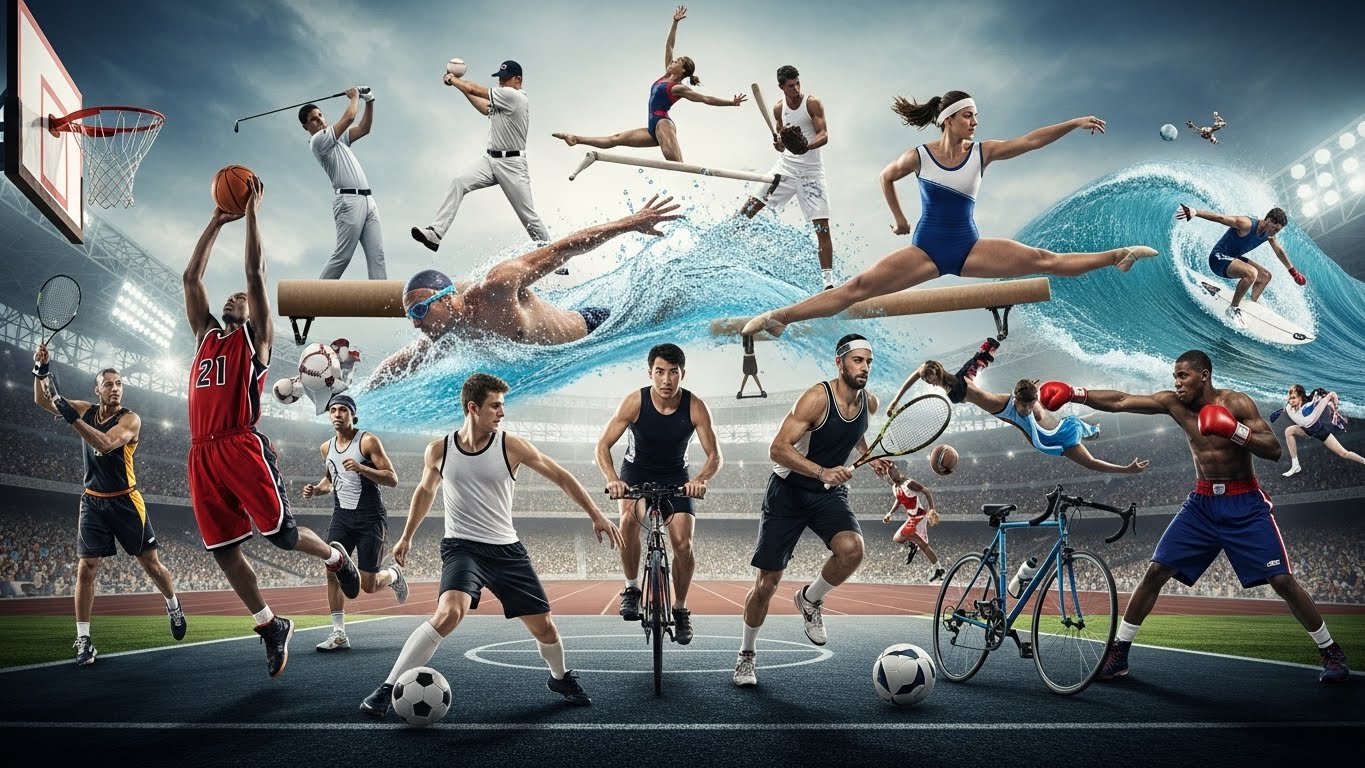
Sports have always been an intrinsic part of human culture, evolving over centuries to become a prominent part of both individual lives and collective societies. What began as simple recreational activities and rites of passage have developed into large-scale, organized, and professional global events watched by billions. As diverse as the cultures that gave birth to them, sports have grown to become symbols of national pride, personal achievement, and social unity. This blog post will take you on a journey through the history of sports, their impact on society, and their evolution into the multi-billion-dollar industry we recognize today.
The Early Origins of Sports: Ancient Beginnings
The origins of sports can be traced back to the earliest civilizations where physical activity played a key role in survival, spirituality, and social structure. While the precise origins are difficult to pinpoint, we know that early forms of competitive games were prevalent in many ancient societies.
In ancient Egypt, Greece, and China, physical challenges such as running, wrestling, and archery were practiced as both training and competition. However, it was the Greeks who truly formalized sports, particularly through the creation of the Olympic Games. The first recorded Olympic Games took place in 776 BCE in Olympia, Greece, and were held every four years to honor the god Zeus. The original Olympics were simple affairs, with athletes competing in foot races, wrestling, and the pentathlon, which included a combination of running, jumping, discus, javelin, and wrestling.
The ancient Romans also played a significant role in shaping the concept of sports. Gladiator contests, chariot races, and public spectacles in arenas like the Colosseum became symbols of Roman power and entertainment. While the games were often brutal and violent, they were integral to the Roman social and political structure, serving both as entertainment for the masses and as a display of imperial authority.
The Middle Ages: Decline and Preservation of Sporting Traditions
After the fall of the Roman Empire, sports took a backseat during the Middle Ages. However, physical activities did not vanish completely. Instead, they became more localized, taking the form of traditional games tied to regional cultures. These games were often less formal and more chaotic than their ancient counterparts, with no standardized rules or regulations.
One notable example from this period is medieval jousting, which became popular among the European nobility. Jousting was a sport that demonstrated a knight’s skill, strength, and bravery. Other medieval activities, such as archery and hunting, also retained their status as forms of both recreation and martial training.
In parallel, various folk games continued to thrive in different parts of the world. Early versions of soccer, for example, were played in English villages and towns during this time. These informal versions of soccer were often unregulated and chaotic, played by large numbers of people with little regard for boundaries or rules.
Despite these regional games, it was in the Renaissance period that sport truly began to be revived in a more structured form. The nobility’s desire for physical fitness and prowess led to the development of organized competitions in activities like tennis, archery, and fencing, as well as the rise of early forms of organized team sports.
The Birth of Modern Sports: The 18th and 19th Centuries
The Industrial Revolution in the 18th and 19th centuries had a profound effect on the development of modern sports. As industrialization and urbanization transformed society, people began to seek new forms of entertainment and physical activity. With this rise in leisure time came the need for organized and standardized sports. The key characteristics of modern sports—rules, regulation, and formal competition—began to take shape during this period.
In England, the early 19th century saw the formalization of various sports. Cricket, for instance, had already been played in England for centuries, but in the 1800s, standardized rules and leagues began to emerge. The formation of the first cricket clubs and the establishment of the County Championship in 1890 helped shape the future of organized sports.
Football (soccer) also gained immense popularity during this period. The establishment of the English Football Association in 1863 marked a significant moment in the history of soccer. Standardized rules were introduced, and the first competitive league—The Football League—was formed, creating a template for professional football leagues worldwide.
Meanwhile, in the United States, baseball became the dominant sport, with the formation of the National League in 1876 and the beginning of the World Series in 1903. American football and basketball followed closely behind, both created in the late 19th century and gaining rapid popularity in the early 20th century.
During the same period, the rise of other sports such as rugby, tennis, and boxing helped further define modern sporting culture. Sports organizations, clubs, and governing bodies began to emerge, and the commercial potential of professional sports became increasingly apparent.
The Globalization of Sports: The 20th Century
The 20th century marked the beginning of the globalization of sports. This period saw the development of international competitions and leagues, along with the growing influence of mass media in broadcasting sporting events to a global audience. As air travel and telecommunications improved, athletes, teams, and sporting organizations began to interact and compete on a truly international scale.
The Olympic Games, revived in 1896 by the founder of the International Olympic Committee (IOC), Pierre de Coubertin, became one of the most significant events in the world of sports. The Games have evolved from a small gathering of athletes to a multi-sport extravaganza that attracts participants from nearly every country on Earth. Today, the Olympics are broadcast to billions of people, with countries competing not only for gold medals but for national pride and prestige.
In addition to the Olympics, the 20th century saw the rise of global competitions in sports like soccer, basketball, and tennis. The FIFA World Cup, established in 1930, became the pinnacle of soccer achievement, drawing an enormous global audience and creating international icons such as Pele, Diego Maradona, and Cristiano Ronaldo. Similarly, basketball’s NBA (National Basketball Association) became a global powerhouse, attracting international players like Michael Jordan, Kobe Bryant, and Yao Ming, who helped expand the sport’s reach beyond North America.
The Commercialization of Sports: The Business Side of Competition
With the rise of television in the mid-20th century, sports became a major commercial enterprise. Television networks realized the immense advertising potential in broadcasting sports, and sponsorship deals began to play an increasingly important role in financing sports organizations, events, and leagues.
Corporate sponsorships became a primary revenue stream for many sports teams and athletes, and this relationship has only grown stronger over the decades. Multinational companies, from Nike and Adidas to Coca-Cola and Pepsi, signed endorsement deals with athletes, teams, and events, leveraging the visibility and influence that sports provide.
In addition to sponsorships, ticket sales, broadcasting rights, and merchandise sales became key economic factors driving the sports industry. The introduction of subscription-based sports channels and streaming services like ESPN, DAZN, and others opened up new ways for fans to watch games, while also providing more revenue for sports organizations.
As sports became more commercially viable, the level of professionalism and compensation for athletes increased. Top athletes now sign multi-million-dollar contracts, participate in endorsement deals, and become global celebrities. The professionalization of sports has created an entirely new form of entertainment, with athletes earning lucrative salaries and securing lasting legacies in the process.
The Rise of Esports: A New Era of Digital Sports
In recent years, a new form of competition has emerged, signaling a shift in how sports are perceived and consumed. Esports, or competitive video gaming, has taken the world by storm, attracting millions of fans, players, and investors. What began as a niche interest among gamers has rapidly grown into a global phenomenon, with tournaments like The International (for Dota 2), the League of Legends World Championship, and the Fortnite World Cup drawing huge audiences and offering millions in prize money.
Esports has introduced a new generation of athletes—often younger than their counterparts in traditional sports—who compete in digital arenas rather than physical ones. This new form of competition has allowed gaming to enter the mainstream, with teams, sponsorships, and streaming platforms like Twitch revolutionizing the way fans engage with sports. Esports offers a unique fusion of gaming and athleticism, as players hone skills similar to those required in traditional sports—reflexes, strategy, and teamwork—but in a digital environment.
The commercial potential of esports is staggering, with major corporations and sports organizations now investing in the space. Esports arenas, sponsorships, and merchandise sales are rapidly growing, and esports leagues are beginning to resemble traditional sports leagues, complete with teams, coaches, analysts, and media coverage.
The Future of Sports: Technology, Diversity, and Inclusion
Looking ahead, the future of sports seems brighter and more dynamic than ever before. Technological advancements are set to further shape the way we experience and participate in sports. Virtual reality (VR) and augmented reality (AR) have the potential to change how fans experience games, offering immersive viewing experiences or even interactive participation in events. Advances in data analytics and artificial intelligence (AI) will likely influence the way athletes train, strategize, and recover, while also helping coaches and teams make more informed decisions during competition.
Additionally, the increasing focus on diversity and inclusion in sports is shaping the future. Women’s sports have gained greater visibility, and various sports organizations are taking steps to ensure that opportunities are available for athletes from all backgrounds. Efforts to combat racial discrimination and promote social justice have become central themes in many professional leagues, signaling a more inclusive future for athletes and fans alike.
Sustainability will also be a growing concern. The environmental impact of sports—such as the carbon footprint of large stadiums and international travel—has led to greater awareness and efforts to create eco-friendly events and venues. Many sports organizations are now implementing sustainability initiatives, from reducing waste at major